
One cracked plate can turn a move into a costly headache. The good news is that protecting fragile items is not luck, it is method. If you have ever wondered how to properly pack for moving, you are in the right place. In this guide I will show you the exact steps professionals use to get glassware, electronics, and heirlooms to the new home intact.
You will learn which packing materials truly matter, from double wall boxes to the right tapes and cushions. I will teach you how to prep each item, wrap and pad it correctly, and build boxes that absorb shocks. You will see how to size boxes to the load, how to layer and label for safe stacking, and how to stage your home so packing is calm, quick, and stress free. We will cover common mistakes to avoid, simple safety checks, and a short timeline you can follow. By the end, you will be ready to pack fragile goods with confidence and move without drama.
Gathering Essential Packing Materials
Prerequisites and materials

Before you pack a single heirloom, set yourself up for success. Start at least 10 to 14 days early so you are not rushing fragile items like wedding china, crystal glassware, photos, and framed art. Clear a staging table, measure shelves and artwork so you choose boxes that fit, and create “Giveaway” and “Throw Away” bins to reduce clutter. Prepare an inventory sheet and plan to mark immediate-need boxes with red tape for fast identification on arrival. The expected outcome is fewer damaged items, faster unpacking, and lower stress, a detailed protocol that research shows can cut damage rates by up to 25 percent.
Step-by-step
- Choose eco-friendly protection first. Stock biodegradable wraps such as glassine sheets for photos and art, cornstarch-based cushioning or mushroom packaging for delicate edges, and paper-based honeycomb sleeves for stemware. These options reduce plastic waste while still delivering robust shock absorption, see a roundup of eco-friendly packaging materials. Pre-cut sheets and set them in labeled stacks so you can wrap consistently without gaps or tape-heavy fixes.
- Secure sturdy boxes in multiple sizes. Use small boxes for dense items like plate stacks, medium for kitchenware and framed photos, and large only for light, bulky bedding. For heirlooms, choose double-wall cartons and picture or mirror boxes that match frame dimensions. Build a three-layer protection system, inner wrap with acid-free paper or glassine, cushioning with biodegradable bubble or paper, and a rigid outer shell. Line every box bottom with crumpled paper, add Fragile stickers, and avoid exceeding 40 pounds.
- Stock up on packing paper, bubble wrap, and quality tape. Unprinted packing paper fills voids around crystal and china, while biodegradable bubble wrap guards corners and rims. Use strong packing tape or paper-based kraft tape for clean seals, then reserve red packing tape to flag essential boxes like toiletries, basic cookware, and key documents. Label every box with contents and room, this speeds delivery staging and first-night setup.
- Consider professional help for priceless pieces. Brady’s Moving & Storage has served Northern California families since 1945, and their packing teams can handle custom cushioning and precise boxing for art, antiques, and fine dinnerware. This is a hassle-free option if you prefer expert-grade materials and techniques. It also aligns with today’s trend toward personalized, transparent moving services.

Categorizing and Prioritizing Your Belongings
Prerequisites and setup
Knowing how to properly pack for moving starts with categorization and tracking. Set a clean staging area and gather tools before you begin. Prepare a simple cloud spreadsheet with columns for Box ID, Room, Category, Contents, and Condition, and keep your phone ready for photos and serial numbers. Have colored tape for room codes, Fragile stickers, and permanent markers. Treat this inventory as a control checklist, not busywork, because detailed packing protocols can cut damage by as much as 25 percent.
Steps 1 to 3: Separate and prioritize
- Separate categories with precision. Create four piles, Cherished, High-Value or Fragile, Everyday, and Donate or Discard, and move the cherished set away from household traffic. Place wedding china, crystal glassware, framed photographs, and original art in the Cherished pile, then record each in your inventory with photos and a unique Box ID. 2. Prioritize special packing care using a three-layer system, inner wrap, cushioning, protective shell, for heirlooms; see these tips for easier packing for additional techniques. For china and crystal, wrap individually, add bubble wrap, stand plates on edge, and pad the box bottom with peanuts to prevent shock.
Steps 4 to 5: Label and verify
- Label every box on at least two sides with contents and destination room, add Fragile stickers for delicate pieces, and use a distinct color for each room; these packing and labeling tips accelerate unloading. Reserve red tape for first-open essentials so they are visible on the truck and at the new home. 4. Use the inventory to verify box counts at doors, and flag any high-value box for hand carry or top-load placement. 5. For deeper accountability, ask Brady’s about inventory cataloging and storage coordination through the Brady’s Moving & Storage website; share your digital list so box IDs, colors, and handling notes align. The outcome is a room-by-room manifest that safeguards sentimental and irreplaceable items while keeping everyday goods easy to stage.
Step-by-Step Guide to Packing Sentimental and Irreplaceable Items
Prerequisites and materials
Learning how to properly pack for moving starts with the right kit. Gather double-walled boxes, acid-free paper, bubble wrap, foam corners, and tape. Add cushioning, crumpled paper or peanuts, plus markers and Fragile labels. This three-layer plan controls shock and reduces damage by about 25 percent.
Step-by-step instructions
- Build inner, middle, and outer protection for every fragile piece. Wrap each item individually, then pad the box bottom generously. Use double-walled cartons and seal seams with the H-taping method. See box sealing guidance at packing advice and H-taping.
- Wrap crystal glassware individually with clean packing paper. Start at the rim, stuff paper inside the bowl, and cover stems. Add a second layer around bases for extra crush resistance. Pack upright with dividers between pieces, then label contents, room, and Fragile.
- Double-box valuable art and frames using foam corner protectors. Wrap in acid-free paper, then bubble wrap, so surfaces stay pristine. Place in a snug inner carton, then float it in a larger one. Cushion all sides so the frame never contacts the outer box.
- Place items snugly to prevent movement inside the box. Heavier pieces go on the bottom, lighter on top, with no voids. Perform a gentle shake test before sealing; silence means a secure pack. Keep each box under 40 pounds to protect contents and handlers.
- For heirloom china, crystal sets, photos, or original art, call Brady’s. Since 1945, our crews have packed, crated, and inventoried high-value items. We coordinate room placement and apply Fragile identifiers on multiple sides. If you prefer partial help, we offer selective white-glove packing for your most precious pieces.
Maximizing Space in Storage and Transportation
Prerequisites and materials
Before you optimize space, gather double‑walled boxes in two or three uniform sizes, high‑tack packing tape, bubble wrap, acid‑free paper, foam corners, and soft linens for padding. Set a clean staging area and preassemble boxes so you can pack methodically. Your expected outcome is a stable, stackable load that protects wedding china, crystal glassware, framed photos, and art while minimizing the number of cartons. Detailed protocols like these can cut damaged items by about 25 percent, according to industry research, which is especially important for irreplaceable pieces.
- Pack boxes with similar‑sized items for space efficiency. Keep plates with plates, frames with frames, and vases with vases so interior voids are predictable and easy to fill. Use small book cartons for heavy or dense pieces, such as stacked dinner plates wrapped and placed vertically, to avoid overweight boxes. Grouping by size also reduces box count and improves stacking geometry, a best practice highlighted in these tips on fitting items by size for efficient packing.
- Utilize cushions and soft items as additional padding. Wrap crystal stems in acid‑free paper, then a layer of bubble wrap, and nestle them between folded towels or sweaters to fill gaps. Pillowcases can sleeve framed photos after corner protectors are applied. This dual‑purpose method saves space and materials, as recommended in guidance on leveraging soft goods for protection.
- Ensure all boxes are stackable and evenly distributed. Load heavier pieces low within each box, lighter on top, then fill voids with crumpled paper so walls do not crush. Cap box weights around 40 to 50 pounds for safe handling and structural integrity. Follow uniform sizing to create tight columns, a principle echoed in advice on building stable, stackable loads.
- Use Brady’s Moving & Storage solutions for optimal space saving. Our Northern California crews deploy consistent box sizes, padded moving blankets, and vault storage that stacks vertically to reduce floor space. Climate‑controlled options help preserve art canvases and crystal, and our inventorying improves placement so essentials remain accessible. Tailored load plans balance weight across pallets and trucks to minimize shifting.
- Avoid over‑packing which could lead to breakages. If a box bulges or cannot be taped shut flat, redistribute contents. Keep china sets in multiple cartons rather than one heavy box, and test lift before sealing. Add Fragile labels to guide careful stacking and transit.
Tips to Alleviate Moving Stress
Prerequisites, materials, and expected outcome
Set a clear timeline three to four weeks out, designate a staging area, and create a simple inventory template with room codes and box numbers. Gather sturdy boxes, high‑tack tape, bubble wrap, acid‑free paper for photos, foam corners for art, and Fragile stickers, plus red tape to flag your essentials box for first‑night needs. Establish a single family group chat and a primary point of contact with Brady’s Moving & Storage for quick decisions and updates. The expected outcome is fewer last‑minute choices, streamlined teamwork, and better protection for wedding china, crystal glassware, framed art, and photo archives. Consistent process and documentation can reduce damaged items by as much as 25 percent, which protects irreplaceable pieces and your budget.
- Start packing weeks in advance
Begin with low‑use areas and seasonal decor in week one, then proceed to crystal and china using a three‑layer protection system, inner wrap, cushioning, and a rigid outer shell. Line box bottoms with crumpled paper, then add wrapped items upright with dividers, and finish with a cushion cap. Reserve the final week for daily‑use items, and mark your essentials box with red tape for fast identification on arrival. Keep clothes on hangers in wardrobe boxes to save time. For more planning structure, review Forbes Home’s long-distance packing tips. - Assign tasks to family members
Give adults the art and electronics checklist, including photos in acid‑free sleeves and foam‑cornered frames. Assign kids age‑appropriate jobs such as sorting toys and labeling their boxes, which builds buy‑in and reduces repacking. Set mini‑deadlines by room with 15‑minute nightly tidy sessions to reset the staging area. Hold twice‑weekly check‑ins to resolve questions and keep momentum. - Maintain consistent communication with your moving service
Confirm dates, inventory, access constraints, and high‑value declarations in writing, and share your room codes so crews place boxes correctly. Text photos of specialty items like a crystal punch bowl or oversized canvas to your Brady’s coordinator so the team arrives with the right crates and materials. Ask for a pre‑move walkthrough or video call to align on protective pathways and elevator timing. Many providers now use cloud tools for schedules and updates, so opt into notifications for real‑time clarity. - Label each box clearly to speed unloading
Write the room code and a short contents list on two sides and the top, for example, DR‑03, Stemware, Silver Napkin Rings. Add Fragile and This Side Up where relevant, and number boxes to match your master list for quick retrieval. Color coding by room simplifies staging at destination and shortens unpacking time. See additional labeling ideas in these moving tips from top real estate agents. - Leverage Brady’s expert advice for a stress‑free experience
Schedule a quick consultation to validate your packing plan for sentimental and high‑value items, including custom crating for art or dish packs for wedding china. Ask about valuation coverage, furniture padding strategies, and placement maps so crews set each box in the right room. Request a fragile‑first load order and a final walk‑through checklist for move day. With clear roles, early action, and expert guidance, your arrival feels orderly rather than overwhelming.
Ensuring Sustainable Packing Practices
Prerequisites and materials
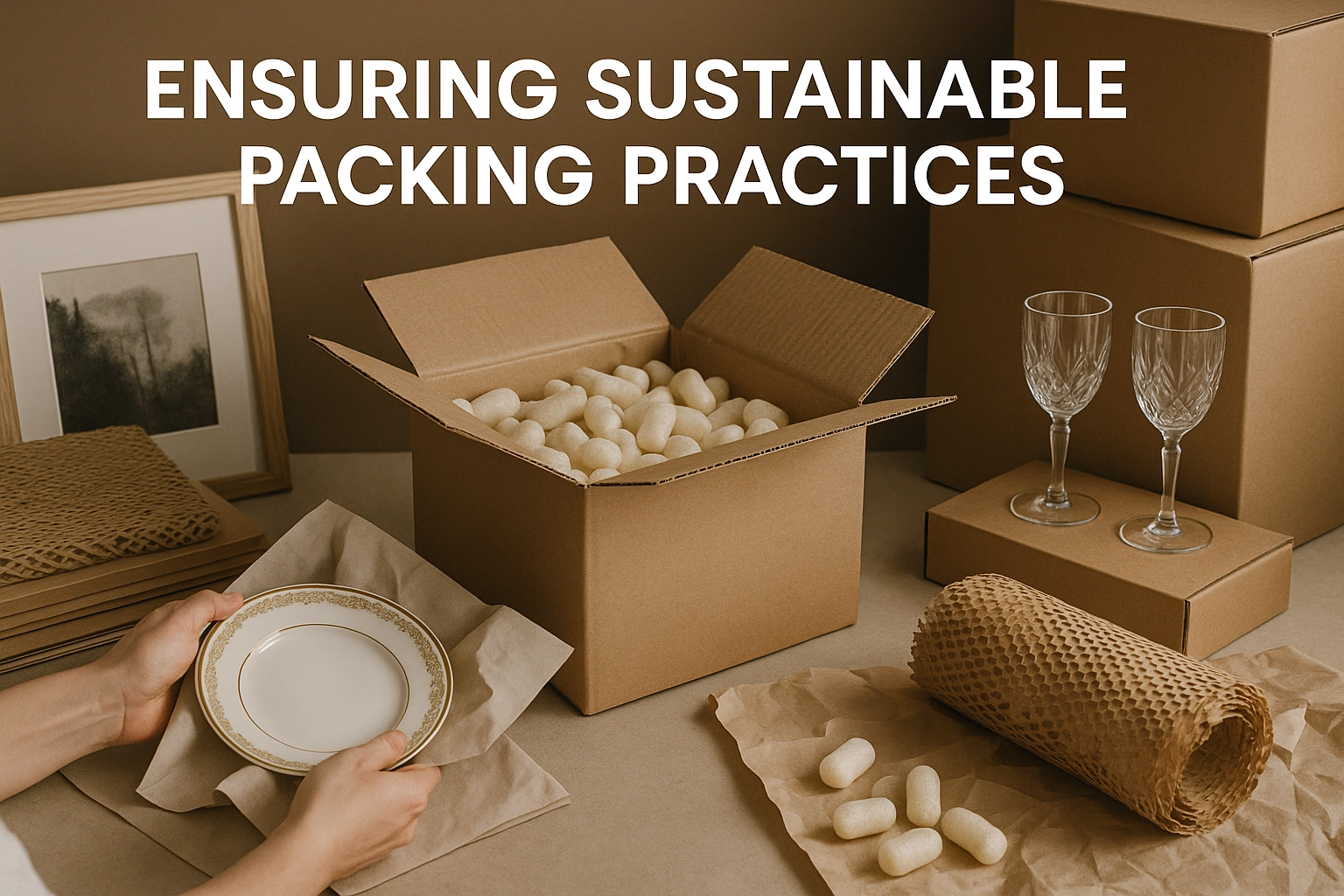
Set a sustainability goal for your move so every decision supports reduced waste without compromising protection for wedding china, crystal glassware, photos, and art. Assemble recycled cardboard cartons, acid‑free paper, paper‑based cushioning, compostable packing peanuts, and corrugated bubble alternatives. Choose water‑activated paper tape and reusable bins where practical, and reserve soft linens for extra padding. A three‑layer protection system, inner wrap, cushioning, and a rigid shell, is still essential, and sustainable materials can fulfill each layer effectively. Detailed, documented packing protocols have been shown to cut damages by up to 25 percent, a key benefit when safeguarding irreplaceable items.
Step‑by‑step: eco packing for heirlooms
- Opt for recycled and biodegradable supplies first. Reference this overview of recycled and biodegradable packing materials to guide selections.
- Build a plastic‑free base layer. Use crumpled paper or starch‑based peanuts instead of Styrofoam; see Forbes’ eco‑friendly packing supplies list for options.
- Wrap each piece with compostable layers. Start with acid‑free paper, add corrugated bubble or molded fiber, then place in a double‑walled box.
- Cushion voids with biodegradable peanuts or paper honeycomb. Keep pieces from touching, especially stemware and framed art corners.
- Seal and mark clearly. Use paper tape, add Fragile labels, and note room and contents to speed careful handling.
- Stage essential items with red tape, then photo‑log boxes. This improves transparency and reduces unnecessary reopening during transit.
Sustainable options from Brady’s Moving resources
Brady’s Moving & Storage can outfit your relocation with recycled‑content cartons, curbside‑recyclable paper cushioning, and biodegradable air pillows that meet the protection standards heirlooms require. Ask our team to right‑size box dimensions for china sets and to supply acid‑free wraps for photographs and artwork so materials remain archival‑safe. For clients who prefer minimal plastic, we can prioritize paper‑based honeycomb, molded fiber inserts, and compostable void fill. After delivery, we help you reuse, donate, or properly recycle cartons and paper, keeping single‑use plastics out of the waste stream. The result is fewer damages, simpler unpacking, and a move that aligns with 2026 sustainability expectations without sacrificing care for your most sentimental pieces.
Conclusion: Successful, Stress-Free Move with Brady’s Moving
For anyone learning how to properly pack for moving, protecting sentimental and high value pieces starts with methodical packing. Use a three layer system, inner wrap, cushioning, and a sturdy shell, for wedding china, crystal glassware, photos, and art. Line every box with crumpled paper, then place wrapped items with dividers, foam corners, or glass cells, and finish with a tight tape seal and Fragile labels. Label contents and room, and tie essentials to red tape so you can find them first. Begin early, ideally 10 to 14 days before move day for delicate collections, which aligns with research showing that clear protocols can cut damage by up to 25 percent.
To finish strong, follow these steps: 1) set prerequisites by staging an area and creating an inventory, plus Throw Away and Giveaway boxes; 2) gather materials, double walled boxes, acid free paper, bubble wrap, foam corners, glass dividers, Fragile stickers, and tack tape; 3) pack heirlooms upright, plate to plate with cardboard between, and store photos in acid free sleeves, art in rigid cartons; 4) choose eco friendly options like recycled cartons, paper bubble, and starch peanuts; 5) seal, label by room, and photograph boxes for accountability. If any item needs custom crating, climate controlled storage, or white glove handling, enlist Brady’s Moving & Storage. Our Northern California team has protected families and businesses since 1945, and we use cloud based systems for tracking. The expected outcome is a calmer move, fewer surprises, and heirlooms arriving intact.