Your data is an asset, but it is also a liability if stored poorly. The market is crowded with security storage services that promise airtight protection, instant recovery, and simple compliance. Not all of them deliver. Choosing wisely requires a clear understanding of how each option handles risk, performance, and cost over time.
This in-depth guide compares leading storage models, cloud object storage, block storage, file services, on-prem systems, and hybrid designs. We will evaluate core safeguards, encryption in transit and at rest, key ownership models such as BYOK and HYOK, identity and access controls, immutability and snapshot policies, ransomware resilience, geo-replication, data residency, and compliance certifications including SOC 2 and ISO 27001. You will learn how to map threats to controls, read SLAs with precision, durability, availability, RPO, and RTO, and avoid hidden lock-in. We also cover performance trade-offs, cost transparency, and operational maturity.
Expect practical checklists, decision criteria, and red flags that separate marketing from measurable security. By the end, you will be able to shortlist providers with confidence, justify your choice to stakeholders, and implement storage that protects what matters without slowing the business.
Understanding Storage Security: Essential Criteria
Perimeter, lighting, and access control
Choosing security storage services starts at the property line. Perimeter fencing should be at least 8 feet high with anti-climb features and limited footholds. Pair fencing with dusk-to-dawn LED lighting that delivers uniform coverage, target 5 to 10 lux at entrances, and motion-activated boost in shadowed corners. Access control adds the next layer, from keypad PIN and RFID cards to biometrics. Keypads are inexpensive but PINs can be shared; card or mobile credentials support audit trails and real-time revocation. Best-practice checklists are outlined in these physical security guidelines.
Surveillance and recording
Surveillance validates entry decisions and deters opportunistic threats. Prefer IP cameras with 4 MP to 8 MP resolution, wide dynamic range for glare, and infrared illumination to at least 100 feet; avoid legacy analog DVR setups that limit identification. Coverage should include gates, drive aisles, elevators, docks, and interior corridors with video retention of 30 to 90 days, plus secure offsite backups. Video management systems with analytics, line crossing, loitering, and license plate recognition improve incident detection without constant human monitoring. Connected sensors for doors and motion, now more mature in 2026, can trigger camera bookmarks and alerts that speed investigations. Ask for a camera coverage map and a sample incident export to verify usability before you commit.
Smart locks and key management
Smart locks and disciplined key management close the loop. Traditional cylinder locks are simple, but lost keys demand costly rekeying and provide no usage history. Mobile credentials, BLE or NFC, offer encrypted entry, time-bound access, and instant revocation, which is ideal for project-based or seasonal access. Choose systems that maintain local operation during network outages and store audit logs for at least 12 months. Minimize physical key distribution with single-user credentials, rotating PINs for contingencies, and role-based permissions. For clients using Brady’s secure storage in Chico and San Francisco, request a walkthrough that demonstrates access levels for staff, tenants, and visitors, then confirm how these controls integrate with online booking and billing to meet growing digital-first expectations.
Exploring Innovative Security Technologies
Advanced access control
Modern security storage services rely on layered access control, not just keypads. By 2026, more than 40 percent of organizations shifted from cards to smartphone credentials, and many saw about a 40 percent drop in tailgating after rollout, according to access control trends for 2026. Compared with PINs, mobile credentials and biometrics reduce sharing and enable instant revocation, time windows, and visitor passes. Biometric checks such as fingerprint or facial verification add strong assurance, but they need consent workflows and backup methods. Prioritize platforms that use AI to flag off hour entries or duplicate device IDs, and that maintain per door audit logs for compliance.
Video surveillance that sees and understands
AI enabled video now does more than record, it interprets activity in real time. Edge processing on cameras accelerates person and vehicle detection, reduces bandwidth, and speeds forensic search. Pair license plate recognition at gates with intelligent corridor alerts to improve response and cut false dispatches. Add privacy controls like masking and role based viewing for mixed commercial and residential settings. For a balanced stack, align with capabilities noted in access control and security technology trends, and set retention based on risk rather than one size fits all.
Smart unit-level protection, Bluetooth locks and alarms
At the unit door, Bluetooth smart locks provide encrypted, app based access, event logs, and temporary keys for employees or family. Versus disc locks, they remove code picking and enable remote permissions, but they require battery health monitoring and radio planning in dense buildings. They excel for short term commercial projects with rotating users and for multi user households. Pair them with individual unit alarms that combine door contacts, vibration sensing, and environmental monitors for water or temperature, then route alerts to a cloud dashboard. Specify tamper detection, supervised sensors, and weekly automated testing with documented results.
Mobile gate access and platform integration
Mobile gate access simplifies entry while preserving security at high traffic properties. Touchless methods, including wave to open and geofenced auto unlock, reduce queues and eliminate lost codes, while time bound mobile passes maintain control for visitors and vendors. Integration with booking and payment systems supports digital first expectations and cleaner audit trails. Plan connectivity with cellular fallback, offline queuing, and a physical keypad as a fail safe. These capabilities fit Brady’s secure facilities in Chico and San Francisco, where mixed commercial and residential demand benefits from fast, auditable, multi layer protection.
Advanced Security Measures in Contemporary Storage Facilities
Smart, connected defenses
Technological advancements are redefining security storage services. AI-enhanced video now runs analytics at the edge, spotting perimeter breaches and tailgating in real time, then escalating only credible alerts. Facilities pair these with connected locks and intrusion sensors that communicate over secure networks, a trend shaping security in 2026 AI video analytics and thermal monitoring. IoT sensors track temperature, humidity, and door status to protect sensitive inventory and reduce false alarms IoT environmental monitoring in storage. The result is faster response, lower bandwidth use, and clearer incident forensics.
Digital access vs keys: what actually improves security
Digital access control has outpaced metal keys and standalone keypads. Mobile credentials let teams grant or revoke unit access instantly, enforce multi-factor authentication, and log every entry. About four in ten organizations already use mobile identities, and eight in ten plan adoption Mobile credentials and biometric trends. Biometric options like fingerprint or face match the person to the permission, limiting code sharing. Balance benefits against device loss and privacy by requiring encrypted credential storage, on-device biometrics, and offline failover with time-bound backup PINs.
Surveillance and unit alarms: layered deterrence that works
Video coverage without analytics misses early cues; analytics without alarms reduces deterrence. Strong facilities integrate both. AI analytics flag anomalies before a breach, while thermal cameras enhance low-light perimeter coverage. At the unit level, individual door alarms outperform corridor-only sensors, since they pinpoint the asset at risk and trigger faster dispatch. Ensure alarms report to a 24/7 monitoring center, link to access-control identities, and are load-tested regularly.
What to prioritize in Northern California
Security is also a market signal. Facilities that demonstrate rigorous controls, climate monitoring, and digital-first touchpoints, from online booking to real-time activity alerts, inspire confidence and win renewals. For high-value or climate-sensitive goods, prioritize AI video with edge processing, mobile credentials, and individually alarmed units in a climate-controlled building. Brady’s Moving & Storage, serving Northern California since 1945, operates secure storage facilities in Chico and San Francisco that align with these best practices.
Brady’s Moving and Storage: A Safe Haven for Your Belongings
With state-of-the-art secure storage campuses in Chico and San Francisco, Brady’s Moving & Storage gives Northern California households and businesses a dependable, centralized option for high-value items and overflow inventory. The Chico site spans roughly 13,000 square feet, a practical footprint for palletized inventory, FF&E, and seasonal stock rotation. San Francisco provides quick access to Bay Area job sites, ideal for short staging windows and expedited will-call pickup. Both locations are purpose built for continuity, combining professional warehousing standards with concierge-level customer support. Brady’s holds an A+ rating with the Better Business Bureau, underscoring excellence in security storage services.
Facility comparison, Chico vs. San Francisco
Choose Chico when you want cost-efficient space and easier truck access for box trucks and 53-foot trailers, for example multi-week holds during remodels or office consolidations. Choose San Francisco when proximity is the priority, such as next-day installs, event logistics, or protecting executive home contents during short-term relocations. A simple rule of thumb, Chico favors capacity and dwell time, San Francisco favors speed and proximity. If your project spans both regions, pair long-term storage in Chico with just-in-time release to San Francisco to reduce handling and detention fees while maintaining chain of custody.
Security stack, monitoring, and customer experience
Brady’s secures its facilities with perimeter fencing and ample lighting, then layers 24/7 video surveillance for real-time and retrospective review. Access is tightly controlled through advanced access control systems, limiting entry to authorized personnel via managed gates and doors, which aligns with the industry’s focus on connected locks and sensors that continue to mature through 2026. For audit-ready projects, ask for documented access protocols, camera coverage maps, and footage retention periods. Practical tip, schedule inventory check-ins during daylight or request escorted after-hours access to speed verifications without compromising controls. The self-storage and warehousing sector is stabilizing, and digital-first expectations are rising, so confirm preferred payment methods and scheduling workflows at intake to keep your move plan frictionless.
The Rise of Storage Condo Products and What They Mean for Security
Why storage condos are surging with investors
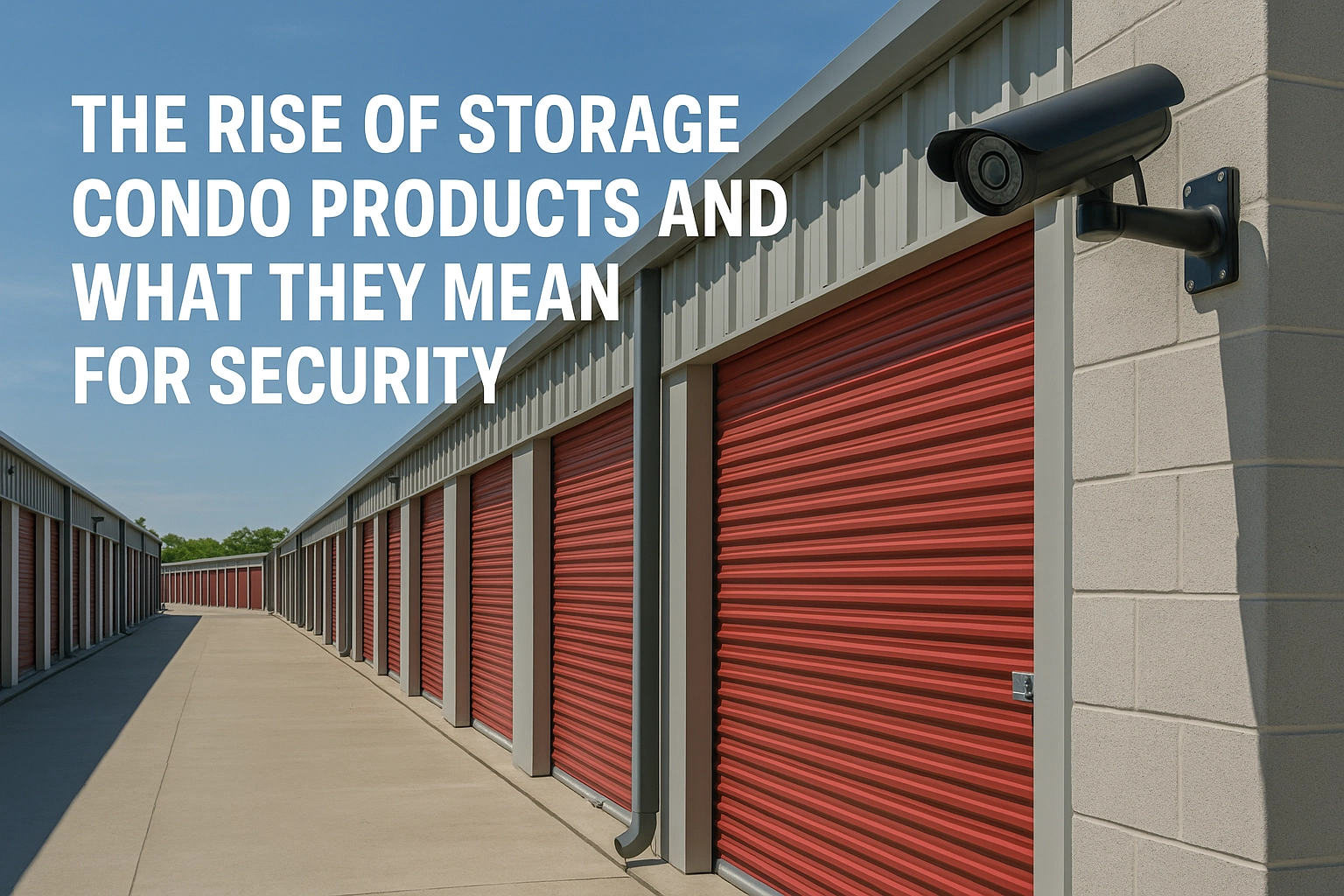
Investor appetite for storage condo products is rising because demand for storage itself is expanding and maturing. The share of U.S. households renting storage increased from 11.1 percent in 2022 to 13.4 percent in 2024, the largest jump between any two survey periods in the Self‑Storage Association’s study, according to PwC’s self‑storage outlook. Storage condos, individually owned units within a secured complex, give buyers a hard asset with potential appreciation and rental income, plus control over finishes, power, and layout. Security is often a centerpiece, with controlled entry, monitored perimeters, and climate management standard in newer projects. Facilities featuring automated access and digital platforms can command premium valuations, with capitalization rates often 75 to 100 basis points tighter than traditional properties, as noted in advanced financing analyses for 2026. For owners and users alike, that focus on security translates into greater confidence and stronger residual value.
Storage condos vs traditional rentals vs managed secure storage
Comparing options clarifies fit and risk. Storage condos deliver ownership, build‑to‑purpose customization, and 24/7 access, but owners shoulder HOA rules, insurance, and ensuring their access control, camera coverage, and maintenance keep pace with threats. Traditional rentals favor flexibility and low upfront cost, although security levels vary by property and upgrade control rests with the operator. Professionally managed secure storage, such as Brady’s facilities in Chico and San Francisco, offers staffed oversight, chain‑of‑custody procedures, climate‑controlled environments, and integrated moving logistics that reduce loss and downtime. For commercial users staging FF&E or sensitive records, the latter often simplifies compliance and service continuity. For individuals storing vehicles or gear long term, condos can be compelling if security specifications are audited and sustained.
Security implications and how Brady’s can help
Across all models, access control and surveillance remain nonnegotiable. Look for smartphone credentials with audit trails, anti‑tailgating video analytics, intrusion sensing at doors and perimeters, and on‑device encryption for cameras and controllers. Digital‑first operations, including online booking and payment, improve accountability and efficiency. Brady’s Moving & Storage provides tailored guidance, from pre‑move security risk reviews and inventory barcoding to sealed load chains, white‑glove packing, and shuttle services between Northern California sites. Practical rule of thumb: choose condos for asset ownership and customization, traditional rentals for short‑term overflow, and Brady’s managed secure storage for regulated, high‑value, or time‑critical goods, then revisit your security plan annually as needs evolve.
Final Thoughts and Recommendations for Choosing Secure Storage Services
Clarify your needs and security priorities
Start by inventorying what you plan to store, its value, and any regulatory or insurance requirements. Define environmental tolerances, for example 60 to 75 degrees Fahrenheit and 45 to 55 percent relative humidity for instruments, documents, and electronics, and determine whether you need continuous monitoring with alerts. Decide how often you will access the unit, since 24/7 customer access trades some control for convenience, while scheduled, escorted access increases accountability. If you handle sensitive items, insist on documented chain-of-custody procedures, sealed containers, and access logs tied to individual credentials. These choices help you filter security storage services by the protections that matter most to your use case.
Evaluate technology, monitoring, and digital operations
Compare baseline security, fixed cameras and keypad codes, with advanced layers that now define best practice. Look for mobile credential access, individual door alarms with tamper sensors, license plate recognition at gates, and IoT sensors that log temperature and humidity with alert thresholds. Connected security systems have matured, with smarter locks and analytics that reduce false alarms and speed incident response. Climate control should be paired with remote monitoring and documented maintenance windows. Digital-first operations matter too, since providers with online booking, customer portals, and digital payments generally demonstrate stronger process discipline and auditability. Ask for sample reports, incident response times, and proof of preventive maintenance on security devices.
Choose a proven provider and weigh storage condos
Track record is a key differentiator. Providers with decades of service, like Brady’s Moving & Storage, operating secure storage campuses in Chico and San Francisco since 1945, bring standardized procedures, vetted staff, and continuous improvement. Verify background checks, dual-authentication for restricted areas, and camera retention policies, ideally 90 days or more. For investor-focused strategies, evaluate storage condos. Pros include fee-simple ownership, equity growth, custom build-outs, and potential rental income; cons include responsibility for security upgrades, insurance, and capital expenses. Review HOA rules, reserve studies, access control standards, camera coverage maps, fire protection, and cyber safeguards for connected locks before you buy.
Consult experts before you sign
Schedule a site visit and request a security walk-through with a checklist. Ask for recent incident statistics, service-level targets for alarm response, and uptime commitments for access systems. Validate that alerts reach a staffed monitoring center and that quarterly tests are logged. For complex requirements, request a tailored risk assessment that maps controls to your items and access patterns. If you want a Northern California partner with proven processes, engage Brady’s team in Chico or San Francisco for a right-sized, security-first plan.