Your data is only as safe as the place you keep it. Yet the market is crowded with vaults, safes, and clouds, each promising ironclad protection. If you have ever asked what is secure storage, you are not alone. For beginners, even the basics can feel opaque, from encryption jargon to compliance labels. This post brings clarity with a plain language, professional review of the options that actually keep information safe.
In this in-depth analysis, you will learn what secure storage really means, the core pillars of confidentiality, integrity, and availability, and how popular solutions deliver them. We will explore encryption at rest and in transit, access control, authentication, key management, redundancy, and physical safeguards. You will see how local drives, network attached storage, cloud services, and password managers compare, including strengths, limits, and common pitfalls. We will outline risks such as ransomware, misconfiguration, and insider access, then map them to practical safeguards. Finally, you will get a beginner friendly checklist for evaluating vendors, key questions to ask, and a few quick wins you can apply today.
Understanding the Current State of Secure Storage
The evolution from traditional to modern secure storage
For beginners asking what is secure storage, it has shifted from locked rooms and tape vaults to digital and hybrid systems that blend speed with protection. Faster media like solid-state drives improved reliability and access times, enabling encrypted-at-rest storage and rapid recovery. To balance cost and performance at scale, hierarchical storage management moves data between tiers so sensitive, high-use files stay on fast media while archives remain affordable and protected. New decentralized models are emerging as well, with systems such as a secure decentralized encrypted storage network promising strong privacy through distributed, verifiable encryption and redundancy. Together, these advances define a landscape where storage design is inseparable from security architecture.
Why secure storage matters more than ever
Threat volume and impact are rising, so secure storage now extends beyond locks and cameras to policies, software controls, and monitoring. Facilities and platforms alike rely on layered controls such as gated access, cameras, individual unit alarms, encryption, and role-based access to limit exposure. Guidance from NIST emphasizes that secure session management is a baseline requirement for storage infrastructure, which is vital when systems are remotely accessed by staff and customers. Operators that adopt remote management models report meaningful cost reductions, about 50,000 dollars per site annually in some cases, but those savings only hold if identity verification, session timeouts, and audit logs are enforced. Education for customers and staff reduces avoidable risks such as tailgating, weak keypad codes, and mishandled credentials. Actionable step for beginners, ask how your provider isolates your data, who can access it, what is logged, and how incidents are handled.
Northern California demand snapshot
Demand is uneven across regions, and Northern California illustrates why. Industrial activity rebounded into 2025 with roughly 2.0 million square feet of positive net absorption, which typically boosts short-term storage and logistics needs. In the self-storage market, constrained inventory and dense, high-rent cities have supported large transactions, for example deals around 25 million dollars in early 2025 in the North Bay. The area’s tech-forward customers also push adoption of AI-assisted surveillance and stronger access controls, a practical response to urban theft risks and compliance pressure. Brady’s Moving & Storage operates secure storage in Chico and San Francisco, aligning urban and regional coverage, so residents and businesses can prioritize proximity, gated access, individual alarms, and clear response procedures when selecting a facility.
Key Trends Shaping the Future of Secure Storage
AI-driven storage architectures are raising the security bar
For anyone asking what is secure storage today, AI is turning storage from a passive repository into an active security control. Modern systems use behavior analytics to flag anomalies, isolate suspicious workloads, and trigger immutable snapshots that blunt ransomware. Zero trust, a 2026 priority, evaluates every access request continuously based on identity, device health, and behavior, as outlined in cloud security trends for 2026. For beginners, ask providers about MFA and least privilege on storage consoles, automated anomaly detection, and adherence to NIST guidance that requires secure session management for storage infrastructure.
Climate-controlled and cloud-integrated storage are converging
Strong environmental control supports both data integrity and asset preservation. Maintaining roughly 60 to 75 degrees Fahrenheit and 40 to 60 percent relative humidity helps prevent drive failures, media warping, and mold in physical units. Cloud integration adds centralized policy and hybrid models that keep key data local, plus video management that applies analytics across sites. Remote management programs have documented savings of about 50,000 dollars per facility each year, freeing budget for cameras, alarms, and training. At Brady’s Moving & Storage in Chico and San Francisco, climate monitoring and cloud oversight help deliver consistent safeguards across locations.
Security tech trends to watch, including cloud-based surveillance
Cloud-based surveillance is evolving from simple offsite storage to intelligence at scale, correlating loitering, perimeter breaches, and tailgating across cameras and doors. AI video analytics generate real time alerts, while cybersecurity mesh patterns keep identity, logging, and policy enforcement close to each asset yet visible centrally, a direction echoed in enterprise infrastructure priorities for 2026. Expect continued adoption of gated access, individual unit alarms, and 24 by 7 recording, anchored by encryption in transit and at rest and signed audit trails. For an easy checklist, ask about zero trust roadmaps, immutable backups, cloud VMS capabilities, staff and customer education, and how incident drills are tested.
The Importance of Choosing the Right Secure Storage
What to evaluate before you store
For beginners asking what is secure storage, start with hard controls you can verify. Look for layered security, gated access, individual unit alarms, and 24/7 video coverage, then confirm how long footage is retained and who reviews it. Strong access control, such as key cards, PINs, or biometrics, limits entry to authorized users, a best practice highlighted in guidance for evidence-grade lockers access control mechanisms. Advanced locks and unit-level alarms deter tampering and provide incident visibility, reinforcing physical protections advanced locking mechanisms. Do not overlook digital touchpoints; if the facility uses online portals or mobile credentials, ask about secure session management, a requirement in modern infrastructure standards, to protect your account. Finally, assess accessibility and environment: convenient hours, drive-up options, and climate control reduce handling risk while preserving sensitive items.
How Brady’s Moving & Storage puts security into practice
Brady’s Moving & Storage operates secure storage facilities serving Chico and San Francisco, designed for both residential and commercial needs. Items are housed inside monitored warehouses with controlled entry, recorded surveillance, and unit-level protections, combining perimeter security with granular controls. Sealed vault storage keeps goods consolidated and protected from casual contact, while climate-controlled areas help safeguard electronics, documents, artwork, and upholstered furniture. Access is scheduled to balance convenience with oversight, and trained staff handle loading and unloading to reduce loss and damage risk. These measures reflect industry best practices, from on-site monitoring to staff education, helping ensure only authorized activity occurs around your belongings.
Why location matters
Location directly influences convenience, cost, and preservation. Proximity to your home or business cuts fuel, time, and the handling that can lead to wear, especially during staggered moves. Local climate also matters; coastal humidity around San Francisco and hotter summers in Chico can affect wood, paper, and electronics, making climate-controlled storage a prudent choice. Regional risks, such as wildfire smoke inland or salt air near the coast, should guide packing materials and the need for sealed vaults. When you choose a facility close to your operations, you also gain predictable access windows and faster response if inventory needs change, a practical advantage during moves or seasonal transitions.
Implications of Future Secure Storage Trends
How AI and cloud are redefining storage security
AI and cloud platforms are turning storage from a static repository into an adaptive, continuously monitored system. Zero trust models are moving mainstream, validating users and devices at every step and encrypting data at rest and in transit, see the overview of zero trust storage trends in 2026. On the ground, gated access, individual unit alarms, and cameras are increasingly cloud connected, which enables real time anomaly detection such as flagging unusual access times or rapid code retries. In the back end, Security Operations Centers are being augmented with machine learning for faster triage and response, as detailed in AI-augmented security operations in the cloud. For beginners evaluating what is secure storage, note that NIST identifies secure session management as a requirement for storage infrastructure, so look for strong session controls, multi factor authentication, and audit logging across customer portals.
Tangible benefits for commercial and residential clients
These advances deliver measurable protection and efficiency. AI assisted ransomware detection in modern arrays can react within about a minute, improving data resilience for business records and household archives, see AI-assisted ransomware detection in enterprise storage. For physical facilities, cloud connected alarms and video analytics reduce false alerts and speed incident response. Remote management models have already shown operating cost reductions of about 50,000 dollars annually in case studies, which can fund longer gate hours, better lighting, or additional on site patrols. Cloud based account tools scale easily, so a retailer with seasonal inventory and a family between homes both get simple upgrades such as temporary access codes, automatic payment rules, and usage reports.
Shifts in consumer behavior and expectations
Customers now expect digital first experiences, from mobile gate entry to instant unit reservations. Transparency is rising, clients want visible security layers, access logs on request, and clear data privacy policies. As design trends improve curb appeal, buyers still prioritize fundamentals, gated access, surveillance coverage, unit level alarms, and documented zero trust style controls. Data expectations are higher too, people look for encrypted portals and session protections aligned to industry guidance. In Northern California, including Chico and San Francisco, facilities that pair strong physical layers with AI and cloud security will meet these expectations with more convenience, clarity, and confidence.
Selecting the Right Storage Provider: What to Look For
Critical features: robust surveillance and flexible access
If you are asking what is secure storage in practical terms, start with how a provider monitors the site and how you access your items. Layered protection should combine 24/7 video coverage, individual unit alarms, and perimeter controls such as gated entry and license plate capture, all with documented retention policies. Leading facilities now deploy AI video analytics and thermal imaging to detect unusual activity in real time, which improves response and reduces blind spots; see these trends summarized in facility security technology for 2026. Access should be flexible yet controlled, using unique PINs or mobile credentials, role based time windows, and auditable logs. For any cloud-connected gates or smart locks, ask about secure session management and multi factor authentication, since strong identity controls are part of modern storage infrastructure.
Brady’s competitive edge in Northern California
Brady’s Moving & Storage has supported residential and commercial clients across Northern California since 1945, an experience base that matters when you need secure storage aligned to real project timelines. With facilities in Chico and San Francisco, customers gain convenient regional coverage that can reduce transit time, simplify short notice access, and lower risk during handoffs. Brady’s pairs physical safeguards with trained staff, documented chain of custody, and clear access protocols, a useful combination for businesses storing records, fixtures, or specialized equipment. Flexible terms accommodate temporary swing space during renovations as well as longer placements for inventory or archiving. The company’s end to end coordination, from pickup to storage to final delivery, helps ensure accountability and predictable outcomes.
Checklist for evaluating storage provider offerings
- Surveillance, 24/7 cameras with AI analytics and thermal coverage in exterior zones, plus clear video retention policies.
- Access controls, gated entry, unique credentials, unit level alarms, and audit logs you can review.
- Staffing and response, on site personnel or remote monitoring with documented response times and post orders.
- Physical design, quality doors and hasps, strong lighting, perimeter fencing, and seismic anchoring where relevant.
- Cybersecurity, secure portals, multi factor authentication, and role based permissions for authorized users.
- Flexibility, extended hours or scheduled access, loading equipment, and short or long term options.
- Compliance and insurance, proof of insurance, clear liability terms, and climate control or special handling if needed.
- Transparency, straightforward pricing, barcode or inventory tracking, and customer references.
Conclusion: The Secure Storage of Tomorrow
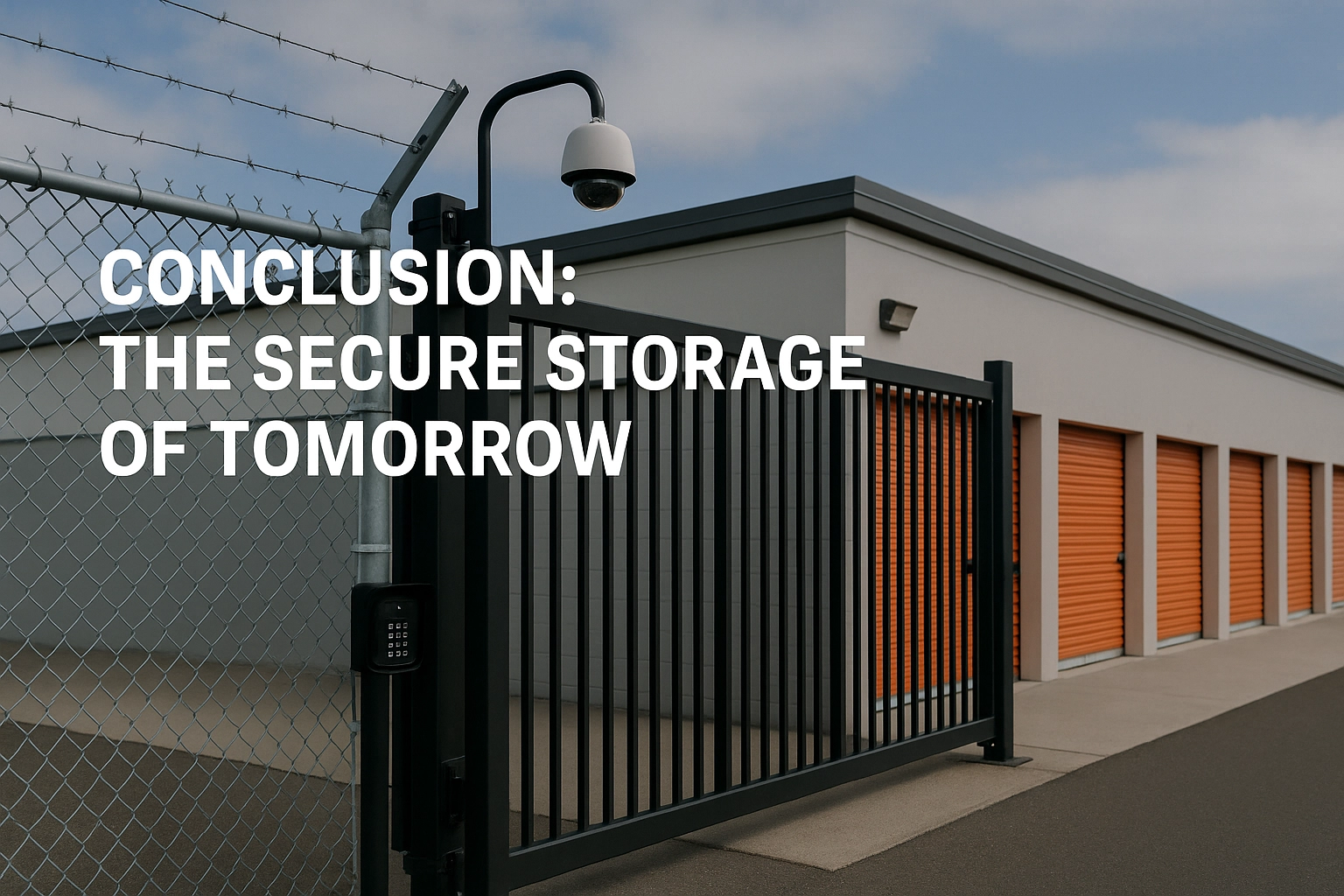
Secure storage is no longer a static lock-and-key concept; it is a living system that adapts to physical and digital threats. Facilities blend layered perimeter controls, gated access, cameras, and individual unit alarms, with modern software that governs who can log in and what they can do. The NIST guidance on secure session management sets requirements that help portals and back-end tools resist hijacking. Remote management models have trimmed operating costs by about $50,000 annually, funds that can be reinvested in guards, analytics, and training. With the broader storage sector expected to evolve significantly by 2026, the necessity of continuously improving protections will only grow.
Taking a proactive next step
If you are evaluating what is secure storage for your needs, approach the decision like a safety and reliability audit. Ask providers to demonstrate perimeter controls, on-site monitoring, individual unit alarms, and how they manage sessions, encryption, backups, and incident response. Request evidence such as access logs, camera coverage maps, and staff training schedules, and tour the site at different times. Brady’s Moving & Storage, serving Northern California since 1945, brings this mindset to secure storage in Chico and San Francisco, pairing strong physical safeguards with customer education and data-informed operations. Choosing a partner that treats security as a continuous program, not a one-time feature, is the surest way to future proof your storage.